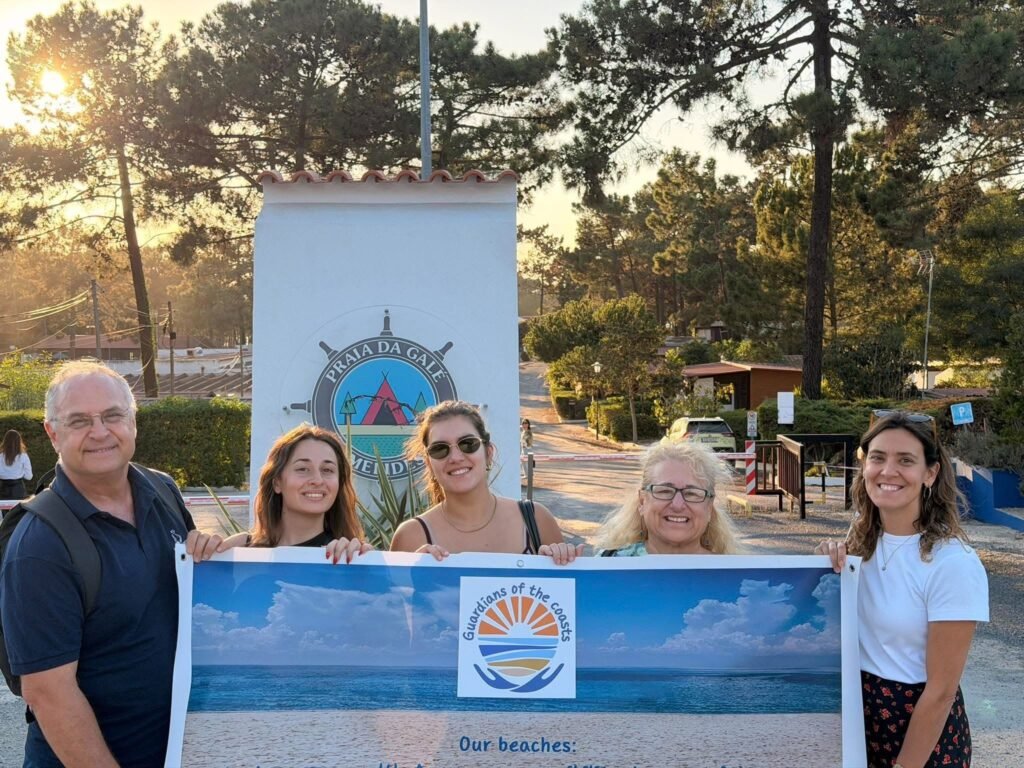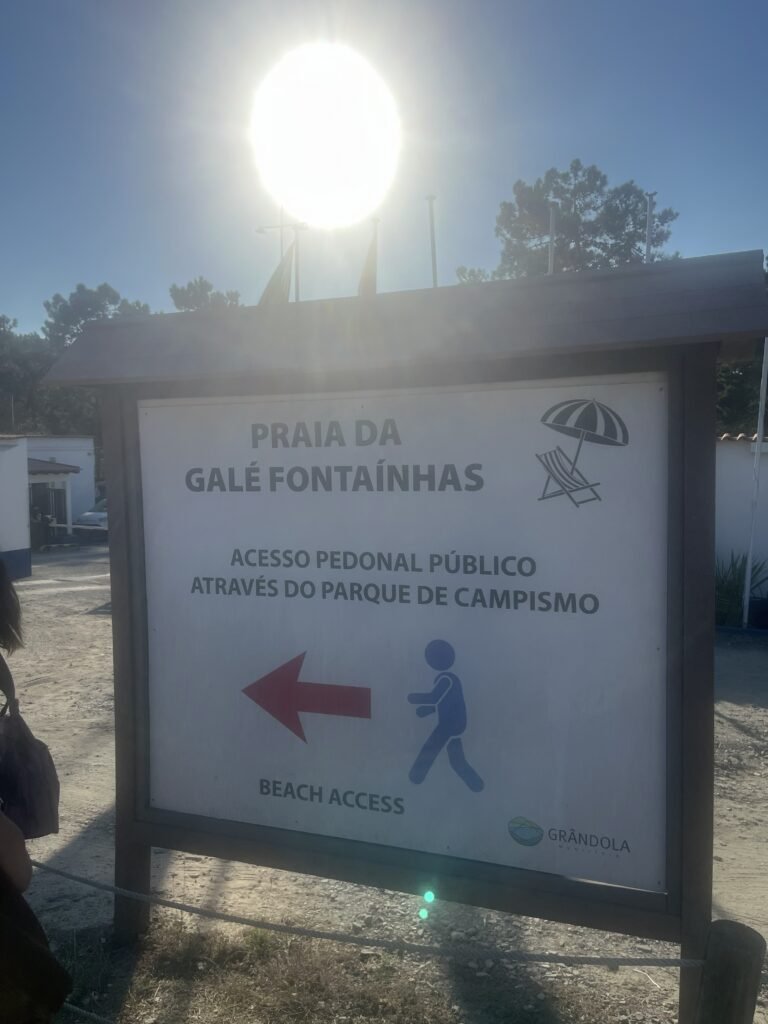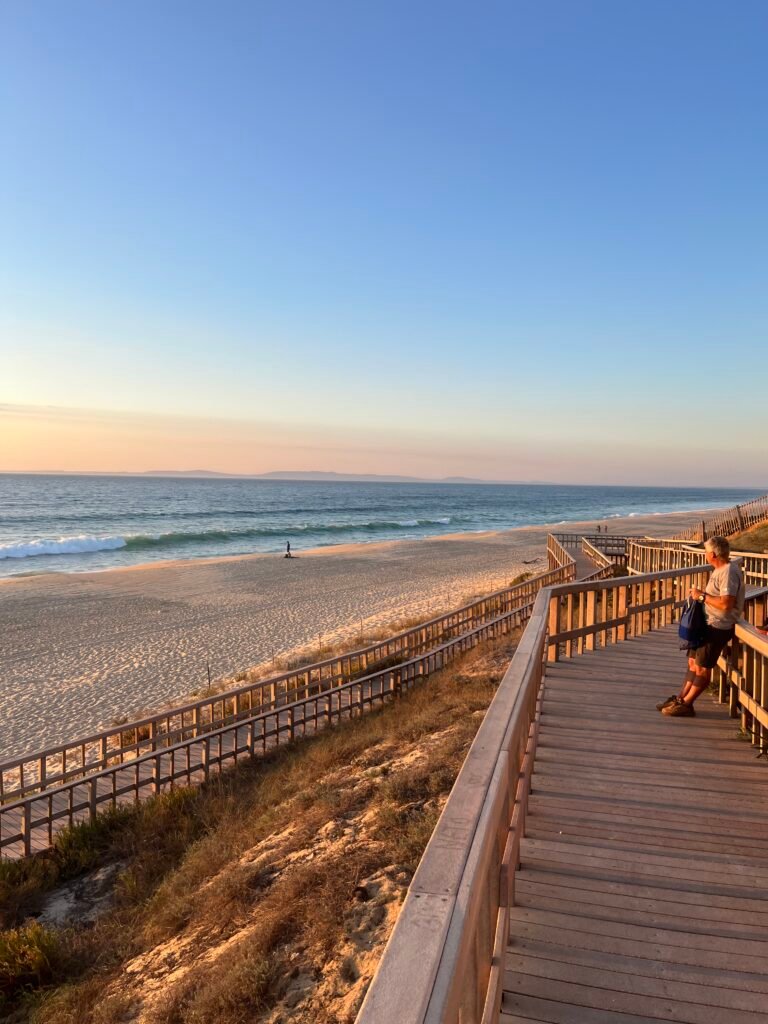
15 October 2026 | Field visits to Galé–Fontainhas, Melides, Portugal
A beach can remain public in law while becoming increasingly difficult to reach. This was the central issue explored during the Greek team’s Erasmus+ Guardians of the Coasts study visit meeting with a representative of Movimento Reabrir a Galé, a Portuguese citizens’ movement.
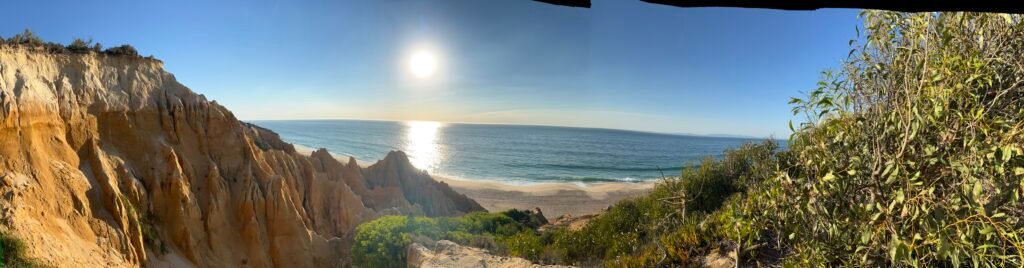
A coastal landscape under pressure
Along the approximately 45-kilometre sandy coastline of Tróia, Comporta and Melides, luxury tourism and real estate development have raised concerns about effective beach access, biodiversity and the conservation of natural landscapes. Decisions affecting land behind a beach can significantly influence the ability of people to reach the shoreline.
According to accounts recorded in Beatriz Pereira’s visit report, access to Galé–Fontainhas Beach has involved passing through the Costa Terra resort area. Visitors have reportedly encountered restrictions and requests for identification. Access to Praia das Camarinhas was described as requiring a walk of approximately one kilometre. These are reported experiences discussed during the visit, not independently verified findings of unlawful conduct.
What Movimento Reabrir a Galé is advocating
The movement calls for the reopening of the Galé campsite, closed since 2021, and for genuinely free public access to the neighbouring coastline. It links the site’s closure, changes in land ownership and access arrangements to a broader shift towards exclusive tourism developments.
Through public demonstrations, awareness campaigns and engagement with competent authorities, the movement seeks to protect both the social value and the environmental character of the area. Its concerns reach beyond camping facilities to the future of coastal ecosystems and the ways local people use their shared landscape.
Environmental protection and social justice
Large-scale development around fragile coastal habitats can place additional pressure on dunes, native vegetation, wildlife habitats and water resources. Access is also a question of social equity: beaches are used by residents, campers, surfers and other visitors, not only guests of high-end resorts.
For Guardians of the Coasts, the meeting illustrated a crucial distinction: legal public ownership does not, by itself, ensure practical and equitable access. Land-use planning, environmental assessment, access routes and civic participation must be examined together.
The exchange offered a valuable point of comparison with challenges encountered along Greek coasts, emphasising active citizenship through public awareness, dialogue and evidence-based advocacy.
We thank the Movimento Reabrir a Galé representative for the exchange of information and experiences.
Our beaches. A common good. A shared responsibility. A common future.
Funded by the European Union. Views and opinions expressed are however those of the author(s) only and do not necessarily reflect those of the European Union or the State Scholarships Foundation (IKY). Neither the European Union nor the granting authority can be held responsible for them.